
Swish Fitness for
Equestrians
BE FIT. RIDE BETTER. LOVE LIFE.
Become the strong, balanced, and confident rider your horse needs.
We put a great deal of thought into our horses’ health and performance. We consider their fitness, conditioning, nutrition, saddle fit, veterinary care, bodywork, recovery, and training programs.
But what about the rider?
Your fitness matters too.
Riders are athletes. Every time you ride, your body must balance, stabilize, absorb movement, coordinate several different actions, react quickly, and communicate with your horse.
When your body is strong, balanced, mobile, and responsive, you can ride with greater confidence and give clearer, more precise aids. When you become tired, stiff, weak, or unbalanced, maintaining your position becomes more difficult—and your horse often feels the effects before you do.
Swish Fitness for Equestrians helps you build the physical strength, flexibility and body awareness you need to ride well, feel better, and enjoy your horse for years to come.
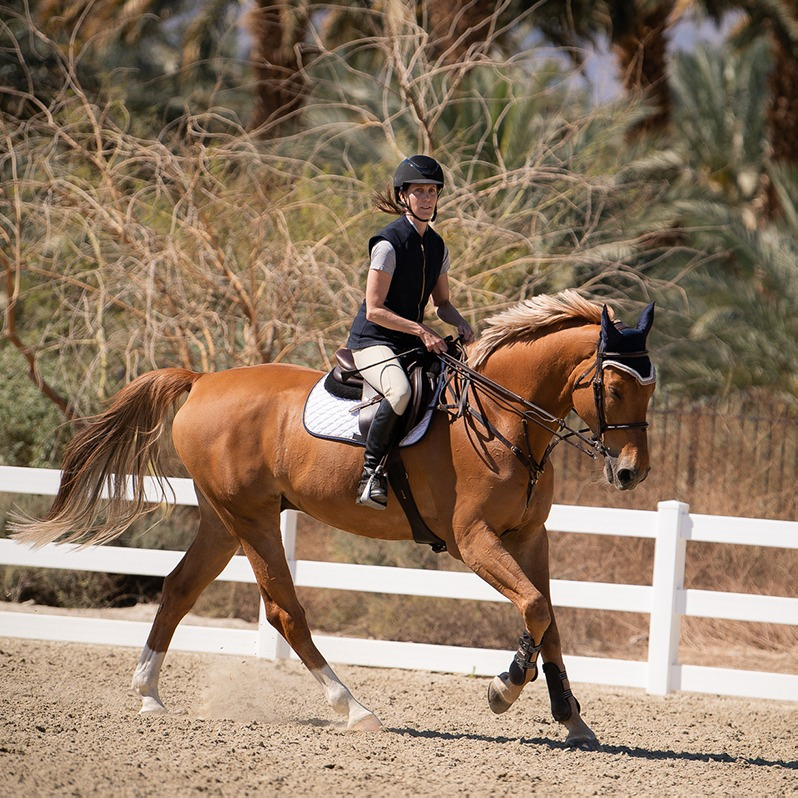
YOUR HORSE IS AN ATHLETE
And So Are You
Riding requires much more than simply sitting on a horse.
Your body is continually adapting to the horse’s movement. You need enough stability to maintain your position, enough mobility to follow the motion, and enough coordination to use your seat, legs, hands and eyes independently.
You do not need to become rigid or overly muscular. In fact, stiffness can interfere with your ability to follow your horse.
The goal is to become stable without bracing, strong without gripping, and mobile.
Does any of this sound familiar?
swish equestrian fitness
May be a good fit for you if you:
Collapse or lean to one side in the saddle
Carry more weight through one seat bone or stirrup
Lose your position when you become tired
Grip with your knees, thighs, or reins for stability
Struggle to keep your lower leg underneath you
Have difficulty doing sitting trot or following the canter
Tip forward or fall behind the motion
Feel stronger riding in one direction than the other
Have stiff hips, ankles, shoulders, or upper back
Experience recurring back, neck, hip, knee, or shoulder discomfort
Find it difficult to maintain soft, independent hands
Feel insecure when your horse spooks or makes an unexpected movement
Tire during lessons, clinics, courses, or long days at the barn
Are returning to riding after an injury, fall, pregnancy, illness, or time away
Want to improve your fitness before moving up a level or returning to competition
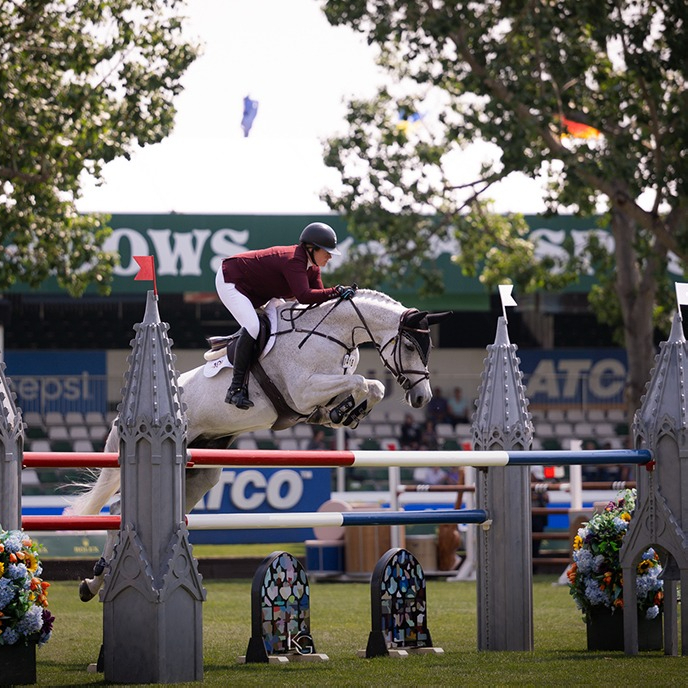
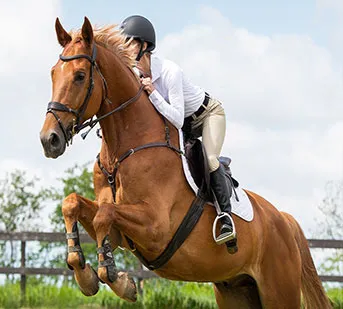
training for your sport
A stronger, more balanced rider can:
Sit more centrally in the saddle
Follow the horse’s movement more comfortably
Maintain better alignment as the horse changes direction or pace
Use the seat, legs, and reins more independently
Give clearer and more consistent aids
Recover more quickly after an unexpected movement
Remain effective for longer without becoming tense or fatigued
You work hard to help your horse become balanced, supple, and strong. Your own training deserves the same attention.
WHY IS EQUESTRIAN SPECIFIC EXERCISES ARE IMPORTANT
These difficulties are not always caused by a lack of riding skill. Sometimes your body simply needs more strength, mobility, endurance, or a better understanding of how to use the right muscles.
How your fitness affects your horse
Riding is a partnership between two moving bodies.
If you consistently shift your weight to one side, brace through your back, grip with one leg, or become unbalanced as you tire, your horse must adjust underneath you.
What we work on at Swish Fitness for Equestrians
1. Deep core strength and control
Your core is much more than your abdominal muscles.
The inner unit core includes the transverse abdominis, multifidus, pelvic floor, and diaphragm. These muscles work together to support your spine and pelvis while coordinating movement through your arms and legs.
An effective core helps you remain balanced without becoming rigid. It allows your pelvis to move with your horse while giving you enough stability to control your position.
Improving your core may help you:
Maintain a more secure and independent seat
Sit taller without stiffening
Follow the motion in sitting trot and canter
Stay balanced over fences
Recover your position after a jump
Use your arms and legs more independently
Reduce unnecessary gripping
Protect your back from excessive strain
Regain your position more quickly after a spook or awkward jump
Simply tightening your stomach or doing endless crunches is not the answer. Riders need a core that can respond, breathe, and coordinate with the rest of the body.
The FEI explains that a properly engaged core supports alignment and independent aids, while excessive tension prevents the pelvis from following the horse’s movement. [FEI guide to an effective riding core] (www.fei.org/stories/lifestyle/teach-me/using-your-core-create-more-effective-seat)
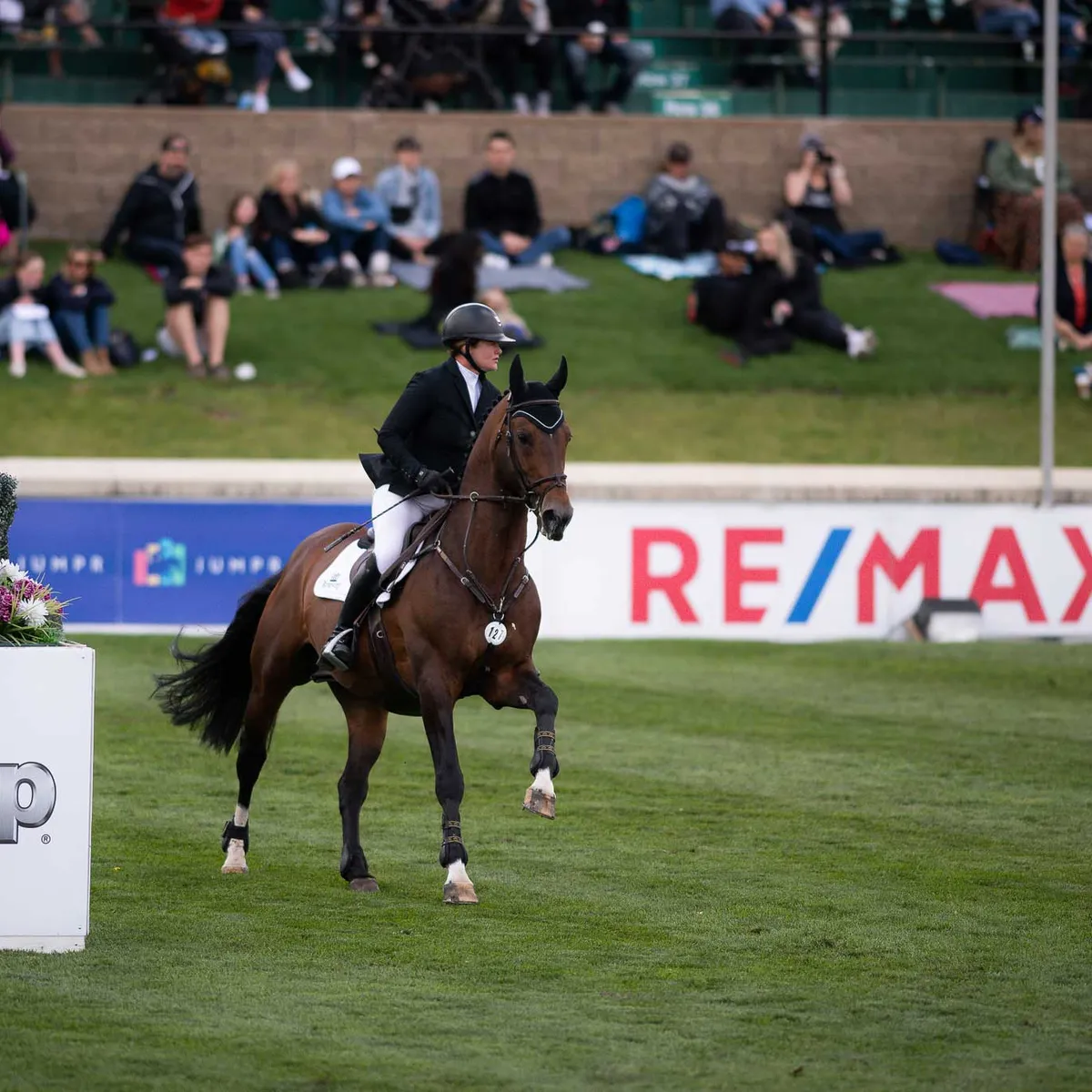
2. Glute, hip, and leg strength
Your glutes and hip stabilizers help control your pelvis, maintain your leg position, and keep you centered over your horse.
Weakness or poor control in this area may contribute to:
One hip dropping
Uneven weight in your stirrups
A leg that swings or creeps forward
Difficulty maintaining a light seat
Gripping with the knees or inner thighs
Knee discomfort
Feeling less secure on one rein
Losing balance through turns, transitions, or landings
Equestrian fitness should include exercises that train both legs together and independently. Single-leg exercises are especially useful because riding often requires one side of the body to stabilize while the other performs a different action.
We work on the gluteus medius and other hip stabilizers, as well as the thighs, calves, ankles, and feet. The goal is not to clamp your legs against your horse. It is to create a stable lower body that can remain long, responsive, and available when you need it.
3. Shoulder-blade and upper-back strength
Your upper body affects your posture, your hands, and the consistency of your contact.
The middle and lower trapezius muscles help stabilize your shoulder blades and support a tall, open posture. When these muscles are weak, riders may round through the shoulders, tense the neck, lock the elbows, or use the reins for balance.
Improving shoulder-blade and upper-back strength can help you:
Sit tall without becoming stiff
Keep your shoulders open and relaxed
Maintain softer elbows
Develop quieter, more independent hands
Avoid collapsing through the chest
Reduce tension in the neck and upper back
Support your upper body during jumping and faster work
Your shoulders must be stable enough to support your arms, but relaxed enough to allow your hands to follow your horse’s mouth.

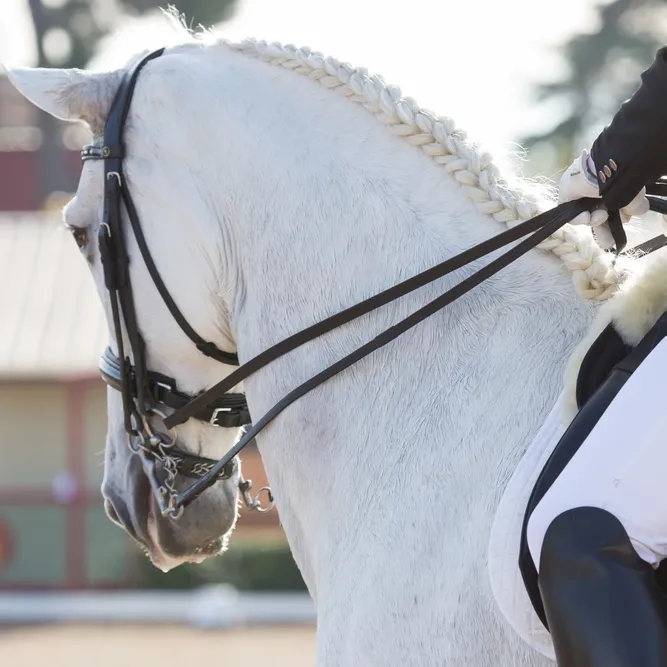
4. Mobility and symmetry
Every rider has a dominant side. Previous injuries, habitual movement patterns, barn chores, work positions, and years of riding can make those differences more noticeable.
You may feel that one hip is tighter, one leg is stronger, one shoulder sits forward, or one direction is easier. Your horse may drift, resist a transition, struggle with one lead, or feel different on one rein.
Your horse may have asymmetries too, so the goal is not to make either partner perfectly symmetrical. The goal is to understand your movement patterns and improve your ability to adjust.
We work on mobility through the:
Hips and hip flexors
Lower back, upper back and neck
Shoulders, chest and arms
Hamstrings and inner thighs
Knees, ankles, and calves
Swish Fitness for Equestrians combines mobility with strength and control. Flexibility without stability is not enough, and strength without mobility can make you feel stiff.
5. Balance, coordination, and body awareness
Riding requires you to coordinate multiple parts of your body at the same time.
You may need to maintain your posture, look ahead, use one leg differently from the other, soften one hand, adjust your seat, and respond to your horse—all within a few seconds.
Balance and coordination exercises can help improve:
Awareness of your weight distribution
Control of your center of gravity
Independent use of your arms and legs
Reactions to unexpected movement
Stability during transitions and changes of direction
Confidence both in and out of the saddle
As your body awareness improves, it becomes easier to recognize when you are gripping, leaning, collapsing, or holding your breath—and to correct the pattern before it affects your ride.
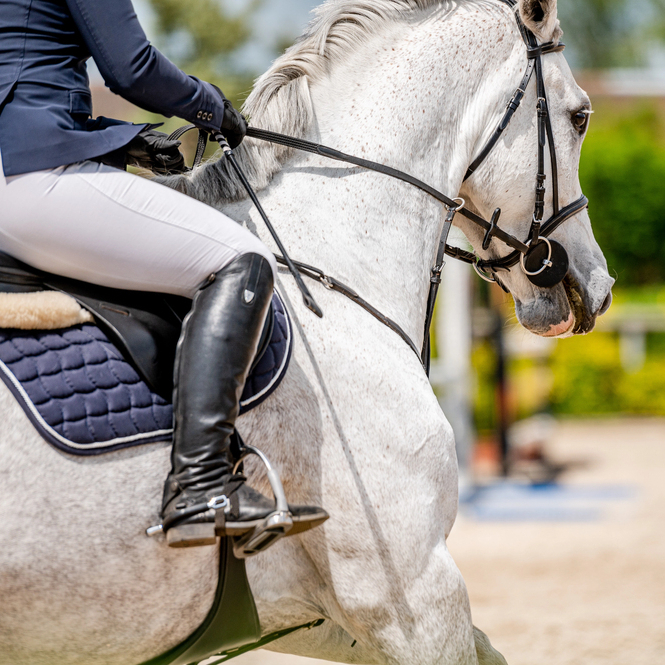
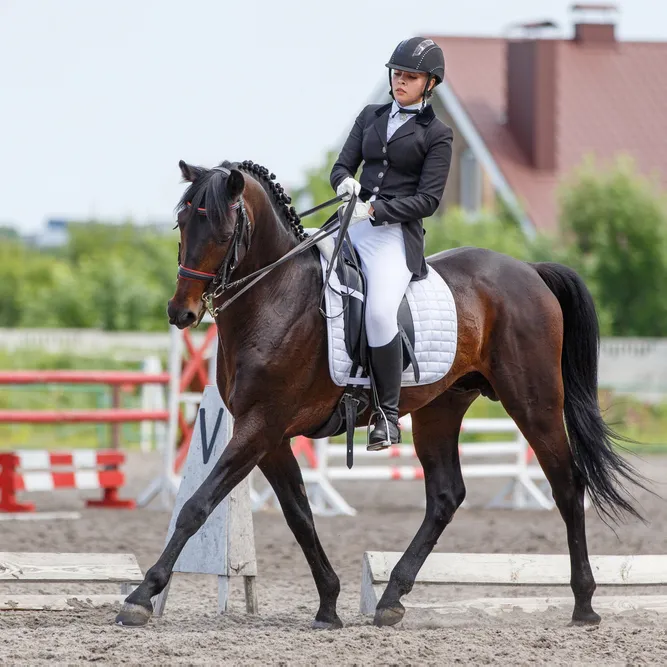
6. Cardiovascular fitness and stamina
Riding, showing, lessons, clinics, and barn work all require stamina.
When you become tired, your position often changes. You may lean forward, brace your back, grip with your legs, lose coordination, or become slower to respond.
Cardiovascular conditioning can help you:
Maintain your position for longer
Recover more quickly between efforts
Stay mentally focused during a lesson or course
Manage long competition and clinic days
Complete barn work with less fatigue
Continue riding effectively when the work becomes more demanding
Your cardiovascular program does not have to begin with running or long, intense workouts. Walking, cycling, interval training, and other activities can be adjusted to your current fitness, preferences, and physical limitations.
Swish Fitness for Equestrians is not only for elite competitors
It can support:
Recreational riders
New and returning riders
Show jumpers
Dressage riders
Eventers
Trail and endurance riders
Western riders
Adult amateurs
Riders returning after an injury or fall
Riders navigating pregnancy, postpartum recovery, perimenopause, or menopause
Riders who want to remain active and independent as they get older
A Physical Therapy informed approach for Equestrian Fitness
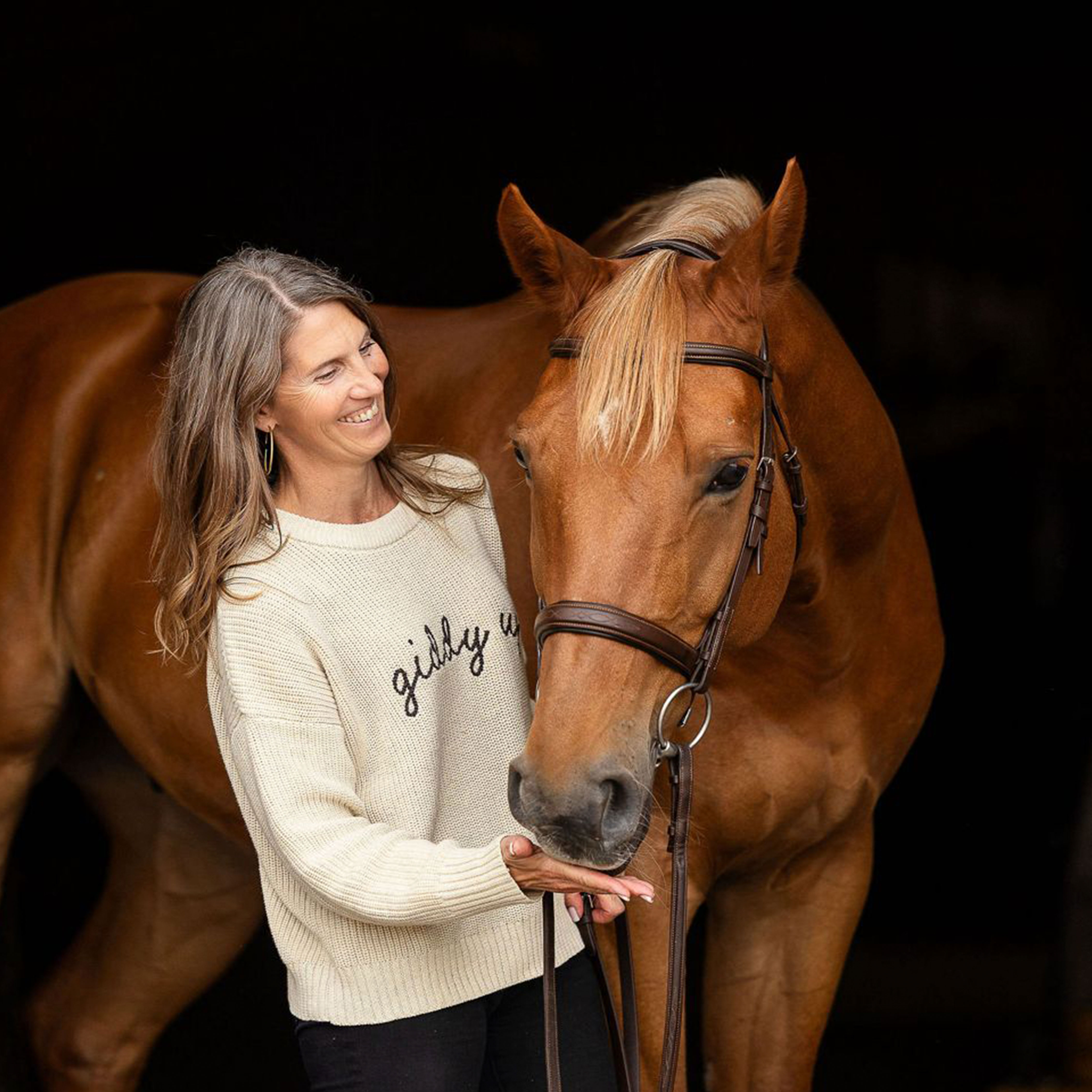
I have worked as a Physical Therapist for more than 30 years. I am also a competitive show-jumping athlete who understands the physical demands of riding, training, competing, caring for horses, and returning after injuries.
I know how frustrating it is when your body interferes with the thing you love.
Swish Fitness combines Physical Therapy knowledge, functional exercise, and real equestrian experience. I provide multiple variations of every exercise during the classes and can provide further modifications depending on how your body moves and what your riding requires.
In the Swish Fitness System we address:
In the Swish Fitness System we address:
Core and lower-body weakness
Poor posture or alignment
Uneven shoulders or pelvic position
Restricted hip or ankle mobility
Back, neck, hip, knee, or shoulder concerns
Weak shoulder-blade or rotator-cuff muscles
Reduced balance and coordination
Loss of strength following injury or inactivity
Decreased flexibility
Reduced confidence in your body
The Swish Fitness System was created to build progressively, with a focus on movements that support riding and everyday life.

WHAT TO EXPECT
Remember - Consistency matters more than perfection. Just as you would not expect your horse to become fit after one training session, your body needs gradual and consistent conditioning.
Build a body that supports your riding
Imagine feeling centered and secure as your horse moves underneath you.
Imagine maintaining your position without gripping, riding longer without losing your form, and having the strength and mobility to respond instead of brace.
Imagine trusting your body again after an injury, fall, or time away.
You do not have to be the strongest person around. You need the right kind of strength for your body, your riding, and your goals.
Investing in your fitness is not separate from your riding. It is part of becoming a better partner for your horse.
Here Is Your Starting Point
TO BE FIT. FEEL GREAT. LOVE LIFE.
Click the button below to start the Swish Equestrian Fitness Program
STILL NOT SURE?
Frequently Asked Questions
Do I need to be an experienced rider?
No. The program can be adapted for new riders, recreational riders, returning riders, and competitive equestrians.
Do I need a bunch of equipment?
Absolutely not! All you need is a few therabands and some light weights (1-2lbs) and a yoga mat.
Will this replace my riding lessons?
No. Your riding coach teaches riding skills and helps you train effectively in the saddle. Swish Fitness helps prepare your body to carry out those skills with greater strength, mobility, control, and endurance.
Can I participate if I have a previous injury?
Your program may need to be modified. Dawn’s Physical Therapy background is especially valuable for identifying movement limitations and selecting appropriate exercises. Significant or persistent pain should be assessed rather than pushed through.
How often should I exercise?
That depends on your goals, riding schedule, health, and starting point. A realistic program completed consistently is more useful than an intense routine you cannot maintain.
Is this only for jumpers?
No. Although Dawn competes in show jumping, strength, balance, mobility, stamina, and independent aids are important across equestrian disciplines. She is well versed in many areas of riding and treats/works with riders from all disciplines.
SAFETY NOTE: If you are experiencing significant pain, recovering from surgery or a recent injury, pregnant or postpartum, living with osteoporosis, or managing a medical condition that affects exercise, your program may need to be modified. Speak with your healthcare provider or Physical Therapist before beginning a new exercise program.

Important links
Services
Gunn IMS
Specialized Exercise Programs
Physiotherapy for Motor Vehicle Accidents
Physiotherapy for Sports Injuries
Physiotherapy for Horse Riders
Private Consulting for Horse Riders
Physiotherapy for Cyclists
Injection Assessments
Fitness for Hose Riders
Fitness for Women
Fitness for Everyone
Contact
Location
Located at Vertex Physio
Unit #205
6958 76 Ave.
Edmonton, AB
T6B 2R2
© 2026 Swish Physio - All Rights Reserved.